
Policymakers have invested heavily in recent years to create new career pathways for high school students. Career and technical education has expanded dramatically, as have the credentials high schoolers can earn.
Yet too many students lack the guidance they need to benefit from these growing opportunities. Counselor shortages remain persistently severe, while career navigation is often a back-burner priority. High schools remain wedded to “college for all,” despite increasing interest in alternative pathways. Consequently, too many young people are unaware of the careers they could pursue, the availability of jobs locally, and the skills required. A 2024 survey found that 66% of young adults ages 16 to 24 “do not know exactly what career they want to pursue.”
This lack of guidance hinders students’ economic prospects and undermines employers’ efforts to get the workforce they need. But new approaches to career navigation could narrow this gap.
As we found in researching a new FutureEd report, innovations in curriculum design, service delivery and technology could broaden access to high-quality career guidance for students, and without massive staff hiring sprees few districts can afford.
One such emerging strategy is to integrate career navigation into curriculum. In California’s Cajon Valley Union School District, for instance, career exploration is part of the classwork, not shunted off to counselors. As part of the district’s “World of Work” curriculum, students participate in “deep career exposure” with hands-on activities and real-life experiences.
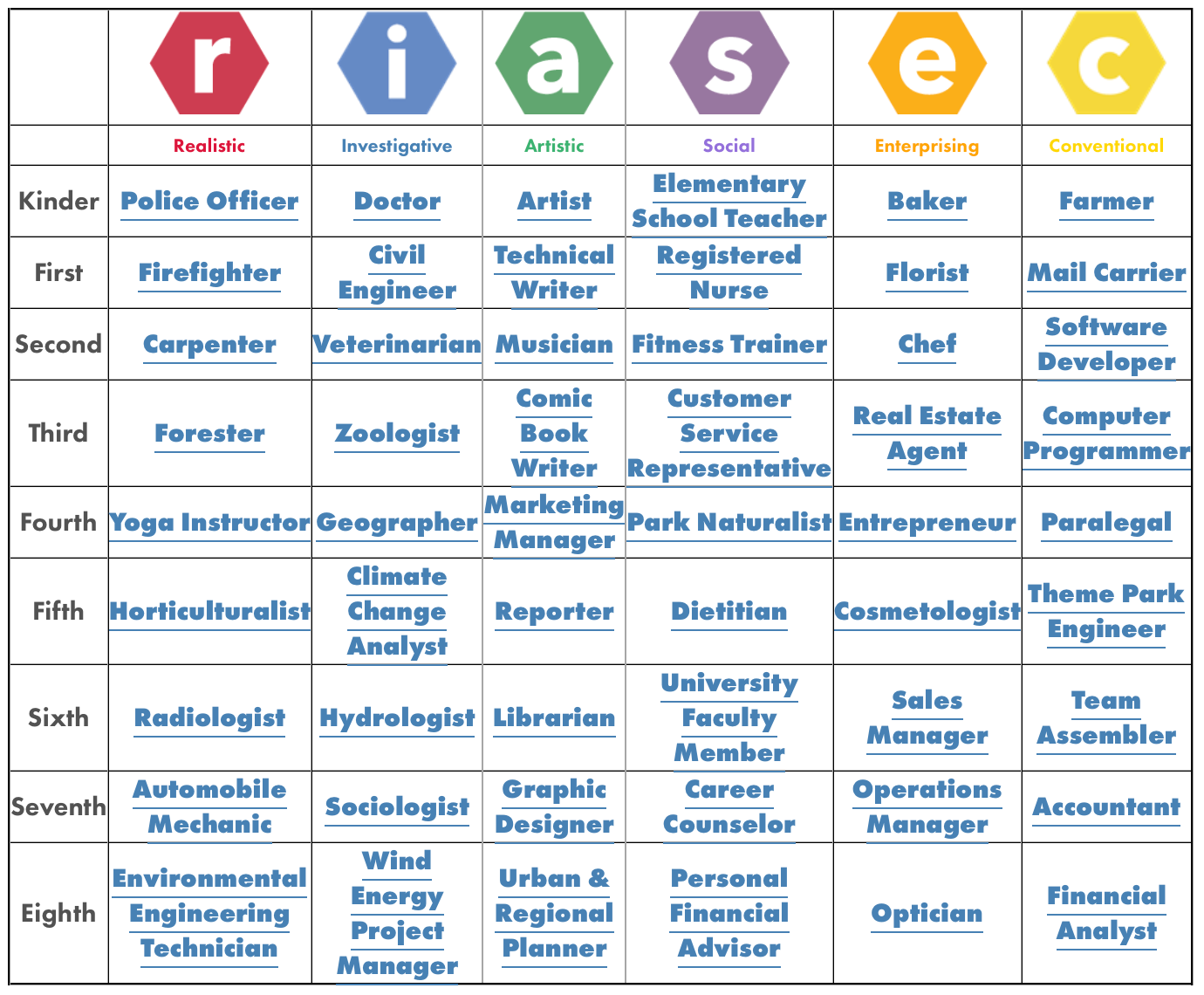
Students start learning about various careers as early as kindergarten, and by high school, they spend up to 40% of their time in job experiences or internships.
Enlisting teachers reduces the burden on counselors and encourages educators to develop academic content relevant to students’ postsecondary lives. Instead of learning about geometry in the abstract, for example, students apply geometric concepts to a construction project, making schoolwork more relevant and engaging.
Real-world career exposure especially benefits students without adequate guidance at home or in their communities. In Cajon Valley’s public schools, about 20 miles outside San Diego, nearly 84% of students are economically disadvantaged. Research shows that low-income households and communities have less access than their wealthier counterparts to the professional networks and social capital that enable upward mobility.
A second emerging strategy leverages nonprofit intermediaries specializing in college and career navigation. A growing cohort of organizations—including Jobs for the Future’s Britebound Center and grantees of Strada Education’s Quality Coaching initiative—are helping to expand schools’ counseling capacity by providing coaching, advising and access to work-based learning.
In Chicago Public Schools, for example, the nonprofit OneGoal trains teachers as advisers to work with student “fellows” at 36 high-poverty high schools who receive college and career guidance for three years, including one year after graduation. Beyond job exploration, this includes social-emotional skills development, test prep, college admissions, financial aid applications and, in their final year, emergency financial aid, if needed. The University of Chicago’s Inclusive Economy Lab found that OneGoal fellows were 15.9 percentage points more likely to graduate from high school than nonparticipants, and with higher GPAs.
While administrators say Chicago public schools have made enormous progress in hiring more counselors, the average ratio still exceeds the recommended proportion of 250 to 1. Intermediaries like OneGoal compensate for that gap.
A third innovation broadening access to career navigation is the use of artificial intelligence-powered tools and platforms. Multiple platforms have recently come on the market, as ed tech entrepreneurs seek to address the demand for career navigation and credentialing. While some platforms offer little more than a chatbot, others provide useful, up-to-date information that could complement a human counselor’s guidance.
One such promising platform is Futre.me, developed by Diane Tavenner, former CEO of charter school provider Summit Public Schools. Its database features more than 800 careers that offer a living wage, half of which don’t require a four-year degree. The site also provides details about the day-to-day tasks involved in various jobs, along with data on expected pay and required credentials—information that counselors may not otherwise have readily available.
Of course, none of these new approaches is a cure for the overall crisis in postsecondary navigation. No career navigation curriculum, regardless of how well designed, can compensate for a lack of reliable data on credentials of value or on careers that can insulate young workers from the coming impacts of AI. Even with the aid of nonprofit intermediaries, many districts won’t have the resources to reach every student who could benefit from guidance. And while technological solutions can serve as powerful tools for career navigation, they cannot fully substitute for human counselors.
Nevertheless, the consequences of inadequate guidance are dire. Many high school graduates are toiling in jobs that do not lead to economic advancement, especially if they opt out of college. Less than 10% of young employees without college degrees work in what one study called launchpad jobs, which have a clear trajectory for career growth. Meanwhile, nearly 42% of recent college graduates are stuck in jobs that underutilize their credentials. Worse still, as many as 4.3 million young people ages 16 to 24—more than 1 in 10—are “disconnected” from both work and school.
Leaders of K-12 schools may prefer to focus on academics and college prep, even as they increase the availability of career and technical education and encourage early college access through strategies like dual enrollment. Yet the realities of today’s economy and the rising cost of college demand that quality postsecondary navigation become central to K-12’s mission. The stakes couldn’t be higher.